Choosing your profile photos
Your photos communicate before anyone reads a word of your bio. They establish who you are, how you live, and - Most importantly - Whether someone wants to know more. Here is how to make them work for you, not against you.
What your primary photo needs to do
Your primary photo has one job: get someone to pause and look at the rest of the profile. It does not need to be the most flattering photo you have ever taken - It needs to be clear, recognisable, and give someone a genuine sense of what you look like.
A clear, well-lit photo where your face takes up most of the frame and is easily visible will outperform a creative group shot, an artistically composed distance shot, or an atmospheric photo where you are barely identifiable. The goal is to be recognisable, not to look interesting in the abstract.
Primary photo checklist
| Requirement | Why | Common failure |
|---|---|---|
| Face clearly visible | People need to see who they are potentially talking to | Sunglasses, hats pulled low, or turning away from camera |
| Face takes up most of the frame | Recognisable. Not lost in background. | Tiny figure in a landscape - Technically a photo of you, practically not |
| Recent - Within the last two years | Avoids the trust problem when you meet in person | Using a photo from five years ago because you liked how you looked |
| Good natural light | You look like yourself, not like a bad Instagram filter | Very dark or shadowy photos, or heavy flash |
| Solo or clearly identifiable in a group | They need to know which one you are immediately | Group photo where it is not obvious who you are |
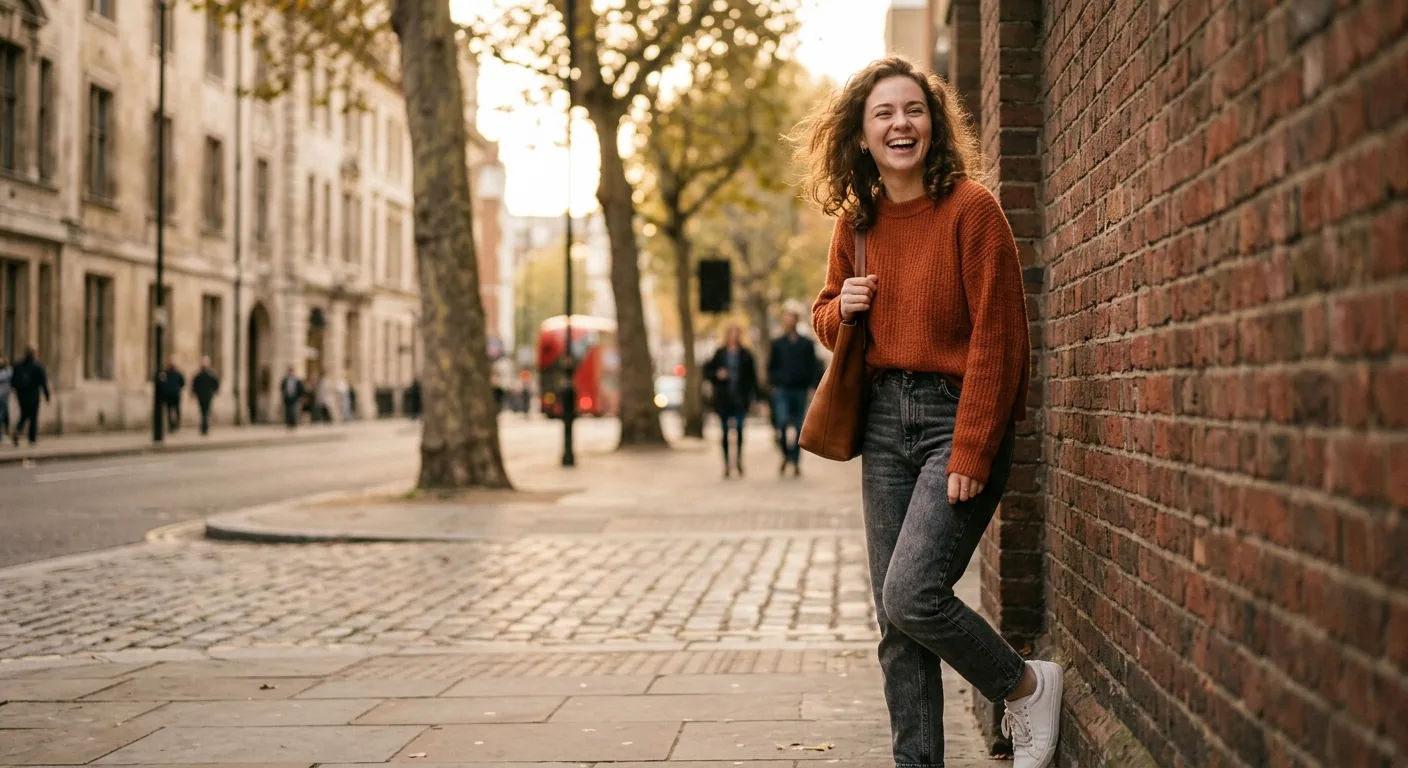
Photo types - What each one communicates
Different types of photos serve different purposes in a profile. A well-rounded set uses each type intentionally rather than uploading six near-identical selfies.
| Photo type | What it communicates | Works when | Common mistake |
|---|---|---|---|
| Solo face-forward | This is you. Clear, honest, approachable. | Always - Essential as primary photo | Sunglasses, too small, too much filter |
| Activity photo | This is how you spend time. Shows personality. | The activity is something you genuinely do and care about | Posed or staged - It reads as staged |
| Travel or location | This is part of your world. Adds context and conversation hooks. | The location is significant to you somehow | You are tiny in the frame and not recognisable |
| Group / social | These are the people you care about. You have a social life. | It is clearly you and the context is warm | Group of 8 and nobody can tell which one you are |
| Full body | Provides an honest overall impression. | Candid and natural - Not forced or stylised | Awkwardly posed or clearly set up specifically for this purpose |
Your photos should collectively give someone an honest sense of your life - Not a curated highlight reel. The goal is to attract people who like who you actually are, not who respond to a performance of an idealised version of you.
The psychology of profile photos - What people actually respond to
Photo research in online dating consistently finds a few counterintuitive things. Smiling significantly outperforms not smiling, even in contexts where someone is trying to appear cool or mysterious. Looking directly at the camera tends to outperform looking away - Engagement signals are processed quickly and unconsciously.
Authenticity registers too. Photos that look like they were taken in the course of a real life - At an event, on a trip, with friends - Perform better than photos that look like they were specifically staged for a dating profile. This is because they signal an actual life, not a performance of one.
What photos communicate beyond your appearance
- Energy and warmth - Whether you seem like someone people enjoy being around.
- Range - Whether your life has variety or seems one-dimensional.
- Social comfort - Whether you have friends and a social life, or exist in isolation.
- Effort - Whether you invested anything in presenting yourself, or threw up six grab shots.
- Consistency with your bio - Whether the photos and words are telling the same story.
Common photo mistakes - And why they matter
| Mistake | Why it damages the profile |
|---|---|
| Every photo is a group shot | Nobody knows which one you are. Swiping is easier than puzzling out identities. |
| Primary photo with sunglasses | Hides your face. Reads - Consciously or not - As something to hide. |
| Only selfies at one angle | No sense of what you actually look like. Creates a mismatch risk when meeting. |
| Only old or heavily filtered photos | When someone meets you and does not recognise you, trust goes immediately. |
| Professional headshots as primary | Formal photos can read as stiff and unapproachable. Works better as a secondary photo. |
| Photos from only one day or context | Variety matters. Six photos from the same night out give almost no information. |
| No smiling in any photo | Perceived as cold or unapproachable, even if that is not the intention. |
How to order your photos
Photo order matters. Most people look at the first two or three photos and decide whether to read the bio at all. Your ordering strategy should move people forward, not give them a reason to stop.
- Photo 1: Your strongest solo face-forward shot. The one where you look like you.
- Photo 2: An activity or context shot - Somewhere you have been, something you do.
- Photo 3: A social photo - With friends or family, showing warmth and ease with people.
- Photo 4: A different location or context that shows range.
- Photo 5–6: Something with personality - A photo that tells a small story or invites a question.
On me.you you can upload up to 6 photos and drag to reorder them. Use all six if you have good options - Profiles with more photos consistently get more engagement than profiles with one or two.
Your photos and your bio should tell a coherent story together. For how to write a bio that pairs well with your photos, see the bio writing guide.
Articles in this section
Selecting a Winning Primary Photo
The Impact of High-Quality Images
Showcasing Personality Through Hobby Photos
Avoiding Common Selfie Mistakes
Using Full-Body Shots Effectively
Choosing the Right Photo Backgrounds
Capturing Authentic Facial Expressions
Group Photo Dos and Don'ts
Updating Photos for Seasonal Relevance
Optimising Photo Order for More Matches
Related guides
What to say alongside your photos.
Generate a bio draft to pair with your photos.
What to say after someone sees your profile.
Back to the pickup guide index.